
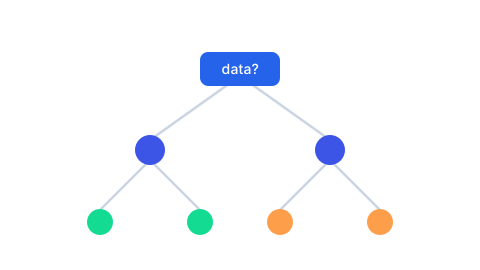
Which statistical test should I use?
Answer a few questions about your data and we'll point you to the right test.
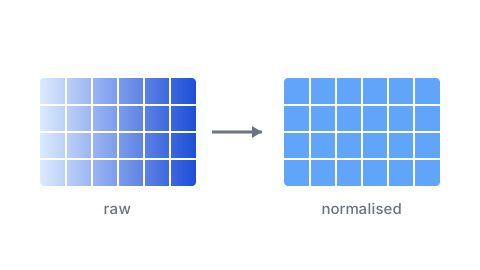
Normalising plate readings: methods and when to use them
From percent-of-control to Z-score: a practical guide to removing plate-to-plate variation without removing your signal
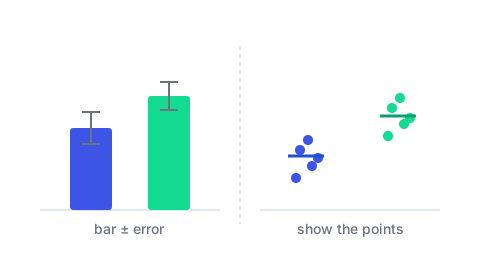
Choosing the right graph for your ELISA results
Bar charts, box plots, and dot plots: when each one is appropriate and how to avoid misleading your audience
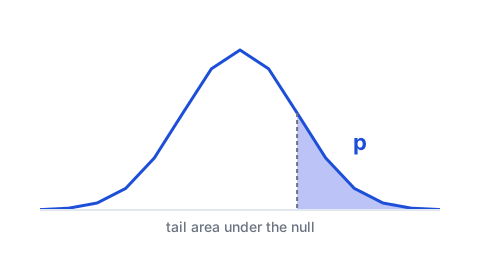
What does a p-value actually mean?
What it is, what it isn't, and how to read p = 0.03 without overstating your result
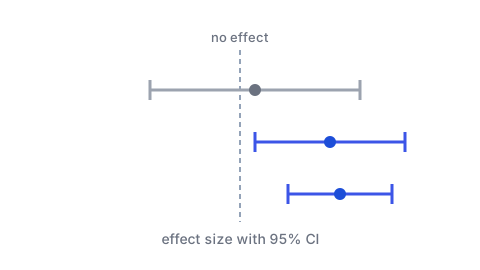
How do I report effect size and confidence intervals?
Why the magnitude and precision of an effect matter more than the p-value alone
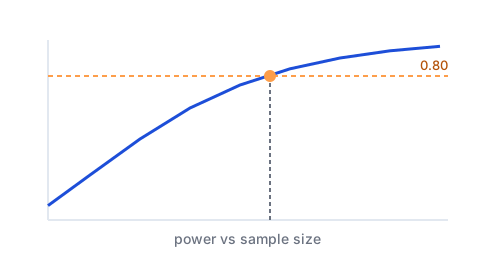
How many samples do I need?
Power analysis explained, and why you calculate sample size before, not after, the experiment
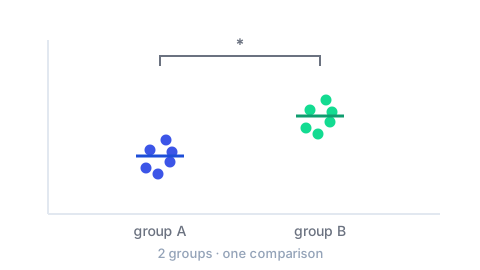
When should I use a t-test?
One-sample, paired, and unpaired t-tests, and why Welch's is the safer default
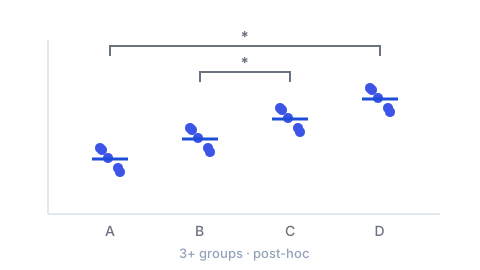
When do I use ANOVA instead of a t-test?
Comparing three or more groups, choosing a post-hoc test, and reading interactions in a two-factor design
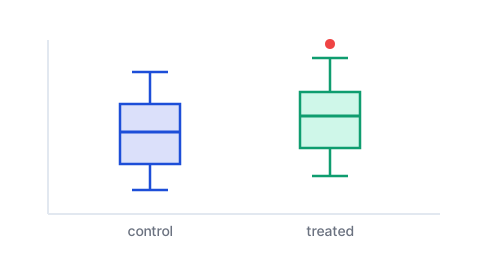
When should I use a non-parametric test?
Mann–Whitney, Wilcoxon, and Kruskal–Wallis: the rank-based alternatives, what they actually test, and when a transform beats them
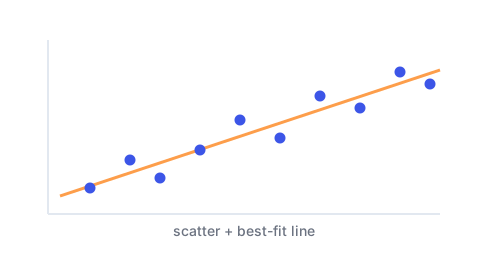
What's the difference between correlation and regression?
Pearson vs Spearman, interpreting R², and why correlation isn't causation
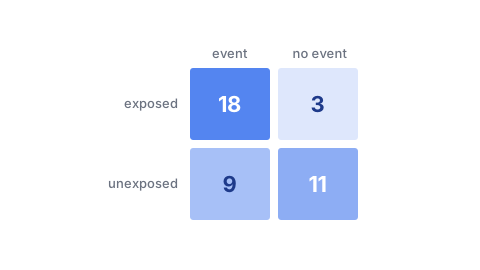
How do I compare proportions and categorical data?
Chi-square, Fisher's exact, and McNemar's, and the effect sizes to report with them
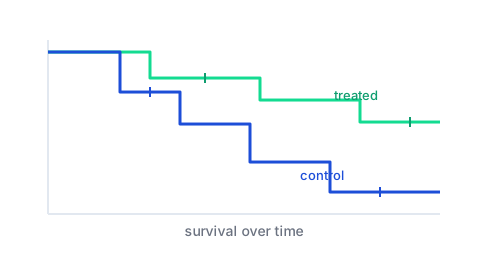
How do I analyze survival data?
Kaplan–Meier curves, the log-rank test, Cox regression, and what censoring means
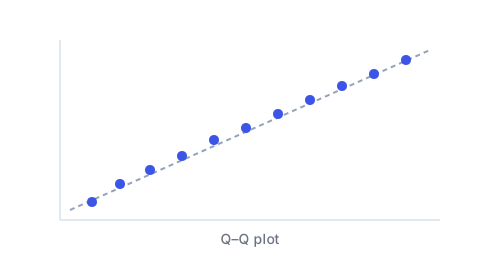
What if my data aren't normally distributed?
Checking normality and variance with plots, and your options when assumptions fail
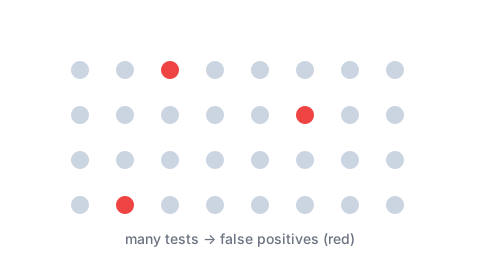
Do I need to correct for multiple comparisons?
When to use Bonferroni and family-wise control versus FDR for large-scale screens
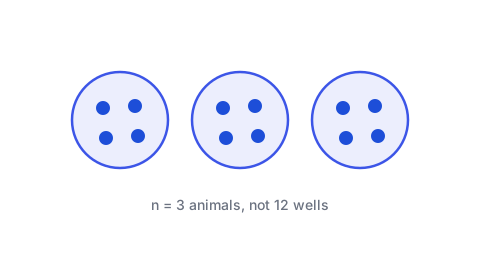
What counts as my n?
Technical vs biological replicates, and how pseudoreplication fakes statistical power
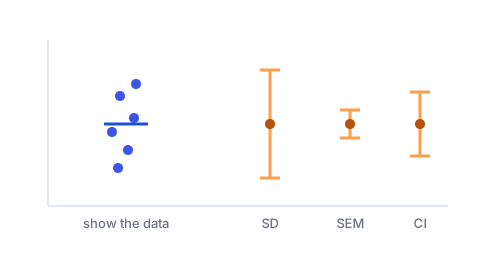
SD, SEM, or confidence interval: which error bar?
Choosing honest error bars and showing your data instead of hiding it behind a bar
How do I report statistics in a paper?
What to put in methods and results so a reader knows exactly what you did and found
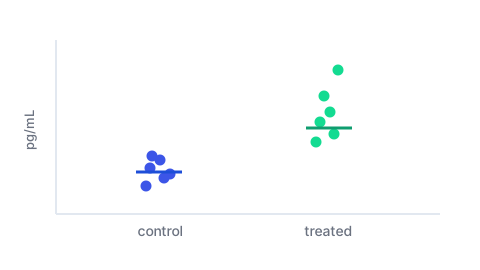
Which statistical test should I use for my ELISA data?
A practical decision framework for plate-based immunoassays
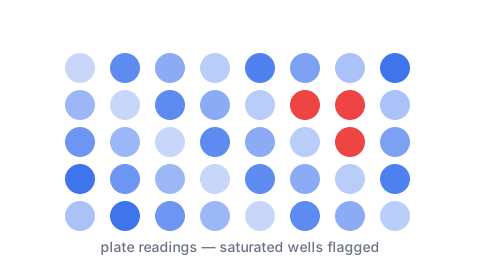
Importing and validating fluorescence readings from plate readers
What to check before your raw OD or RFU values ever touch an analysis pipeline
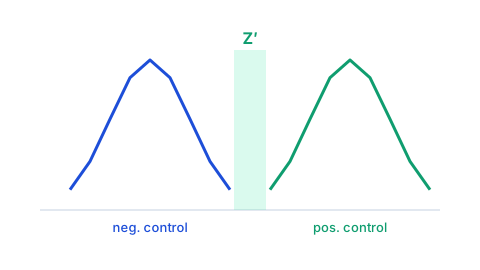
Understanding Z′-factor in high-throughput screening
The single most important quality metric for your assay: what it measures, how to calculate it, and what to do when it fails
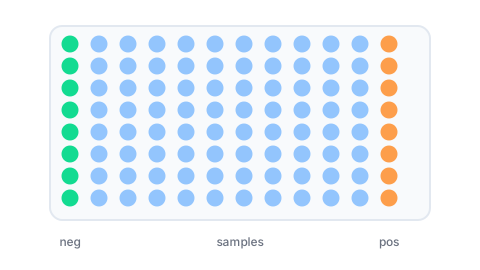
96-well plate layout: design principles that protect your data
How to arrange samples, controls, and replicates to minimise systematic bias before you pipette a single well